
Quick answer
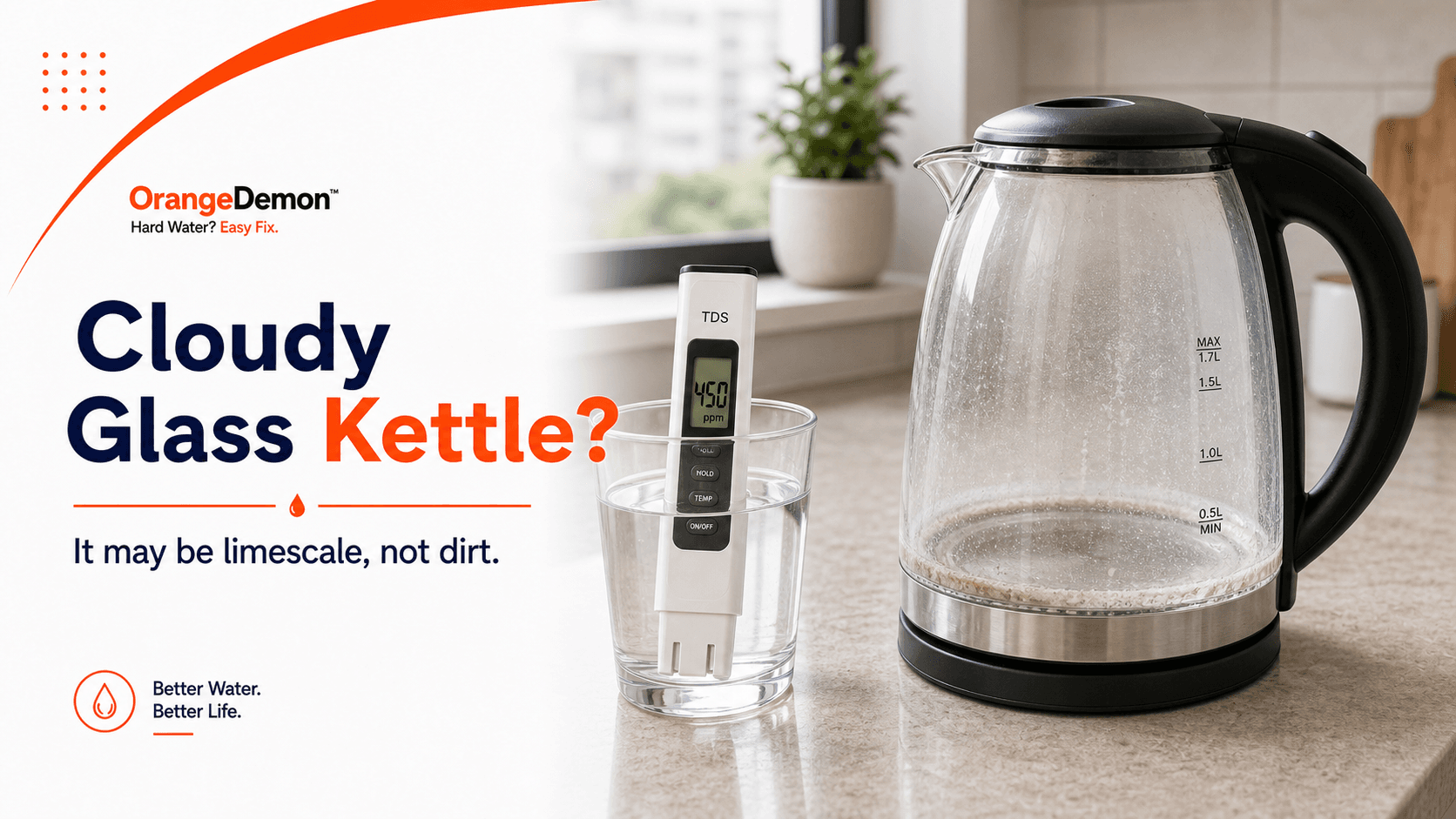
A cloudy glass kettle is usually caused by limescale, especially if the cloudiness appears near the bottom, heating plate, waterline, or areas where water dries. It may look like dirt, but if normal washing does not remove it, the problem is probably mineral scale from hard water.
For kettle interiors, use DescaleX Bio, OrangeDemon's food-grade descaling powder for kettles, baby appliances, and food-contact surfaces.
Why glass kettles look dirty even after washing
Glass kettles are brutally honest. Stainless steel hides scale better, but glass shows every cloudy patch, mineral ring, and drip mark.
If you heat hard water daily, minerals separate during boiling and stick to the glass and heating plate. Over time, the lower part of the kettle starts looking cloudy. The surface may still be clean in the normal sense, but mineral deposits make it look dull and old.
How to tell if it is limescale
It is probably limescale if:
- The cloudiness appears mostly near the bottom
- There is a white ring at the waterline
- Flakes appear in boiled water
- The kettle looks better when wet but cloudy when dry
- Dish soap does not remove the haze
- Other appliances also show white deposits
It may be scratches if the marks are permanent lines, do not change after descaling, and appear in random directions. It may be dirt or tea stain if it is brown, greasy, or removable with normal washing.
Why Indian hard water causes this fast
In many Indian cities and towns, water contains enough dissolved minerals to leave visible deposits quickly. If the water comes from a borewell or tanker, the problem can be stronger. A glass kettle used daily may show a white ring within weeks.
This does not mean the kettle is poor quality. It usually means the water is mineral-heavy — how hard your water is depends on your city's TDS.
Why DescaleX Bio is the correct product
A kettle is a food-contact appliance. You drink the water that touches the cleaned surface. That is why the ingredient profile matters. (See the full kettle descaler guide for the buyer breakdown.)
DescaleX Bio uses food-grade ingredients: citric acid, malic acid, tartaric acid, sodium gluconate, and silicon dioxide. It does not contain EDTA, BTA, phosphoric acid, or sulfamic acid. It is designed for kettles, baby bottle warmers, tea makers, stovetop kettles, drip filter coffee machines, and food-contact surfaces after rinsing.
How to clean a cloudy glass kettle
- Empty the kettle.
- Add 500ml cold water.
- Add one sachet of DescaleX Bio.
- Stir or swirl to dissolve.
- Heat gently until warm, not boiling.
- Switch off.
- Soak for 30 minutes with the lid closed.
- Pour out the solution.
- Rinse at least three times before drinking use.
For heavy scale, extend the soak to 60 minutes. If the kettle has not been cleaned for months, repeat once.
What not to do
Do not scrub glass aggressively with metal pads. Do not boil the descaling solution. Do not mix with bleach or detergent. Do not use WashDX in kettles. WashDX is a heavy-duty appliance/plumbing descaler, not a kettle or baby-appliance product.
Will descaling remove scratches?
No. Descaling removes mineral deposits, not physical scratches. If the glass remains hazy after proper descaling and rinsing, the marks may be micro-scratches or permanent wear. But in most hard-water homes, the first layer of cloudiness is mineral scale.
Final word
A cloudy glass kettle is not always dirty. Often, it is simply showing you the minerals in your water. Clean it with a food-grade descaler, rinse properly, and repeat based on your water hardness.
If the cloudiness is scale, restore the kettle with DescaleX Bio.