
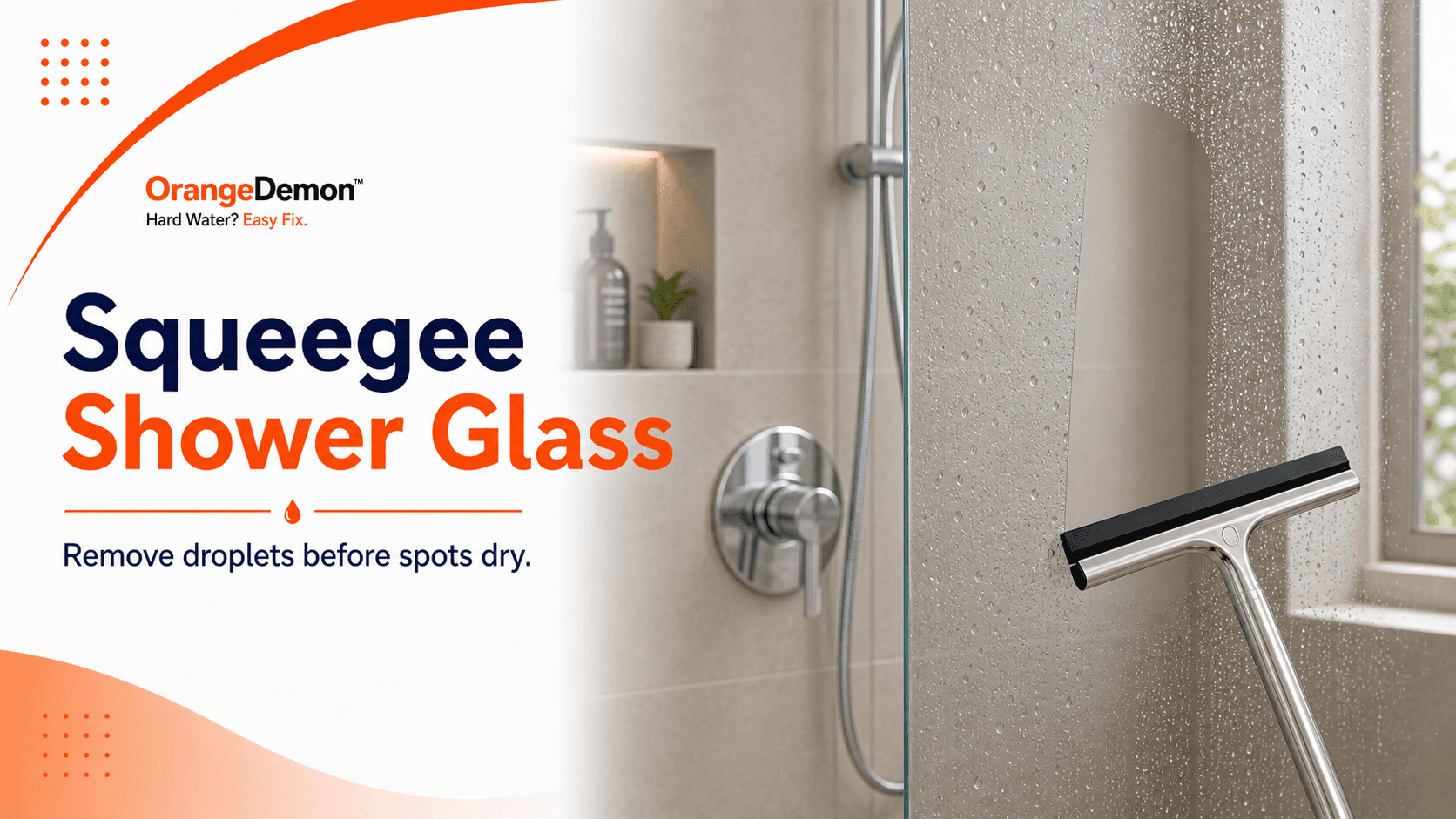
Interior design and bathroom care accounts on Instagram and Pinterest are consistent on one point: squeegee your shower glass after every use. The advice is so widespread it feels like established law. The truth is more nuanced - squeegeeing is effective, but how effective depends entirely on your water's TDS level.
What Squeegeeing Actually Does
A squeegee removes water droplets from glass before they can evaporate and leave mineral deposits. If a litre of water at 500 mg/L TDS evaporates on your glass, it leaves 500 mg of dissolved minerals behind. Physically removing that water before evaporation removes the minerals along with it. The logic is sound.
In soft water conditions - TDS below 200 mg/L - squeegeeing after every shower can virtually eliminate scale buildup and dramatically reduce cleaning frequency. It's highly effective because the mineral load per litre of water is low enough that even partial evaporation doesn't create visible deposits quickly.
The Diminishing Returns at High TDS
At 500+ mg/L TDS, squeegeeing helps but doesn't solve the problem. Here's why: a squeegee doesn't remove all water from glass. Water clings to glass at the edges, in corners, around fixtures, and in a thin film that no squeegee fully captures. At 500 mg/L, that thin residual film, evaporating after every shower, deposits meaningful quantities of minerals. At 700+ mg/L, the problem compounds.
Additionally, water hits the glass during the shower before you squeegee it. Droplets land, adhere, and begin the mineral bonding process immediately. Squeegeeing removes the bulk of this water, but micro-droplets in corners and at the base of the glass still evaporate and deposit minerals.
The Honest Verdict
Below 300 mg/L: Squeegee after every shower. It will substantially reduce or eliminate your scale problem. Monthly acid clean is sufficient maintenance.
300--500 mg/L: Squeegee plus a bi-weekly acid treatment. The squeegee meaningfully extends the period between acid cleans but doesn't replace them.
Above 500 mg/L: Squeegee helps but is not enough alone. Weekly acid treatment is required regardless of how diligently you squeegee. Think of squeegeeing as slowing the accumulation between acid treatments, not preventing it.
The Right Squeegee Technique
Use a silicone-blade squeegee, not rubber - silicone doesn't degrade with occasional acid cleaner contact and maintains its edge longer. Start at the top of the glass and draw the blade down in overlapping vertical strokes. Wipe the blade on a clean cloth after each stroke to avoid redistributing water. The whole process should take 30--45 seconds for a standard shower enclosure. It's the most effective 45 seconds you can invest in bathroom maintenance.
Fighter is OrangeDemon's planned bathroom hard-water cleaner for shower glass and visible mineral stains. Join the launch list for availability updates and any launch-only offer.
Seen results with Fighter Share a before/after on Instagram @orangedemon.in or tag us on Twitter/X @OrangeDemonIn.
Follow OrangeDemon: Instagram / YouTube / Twitter / X