
Quick answer
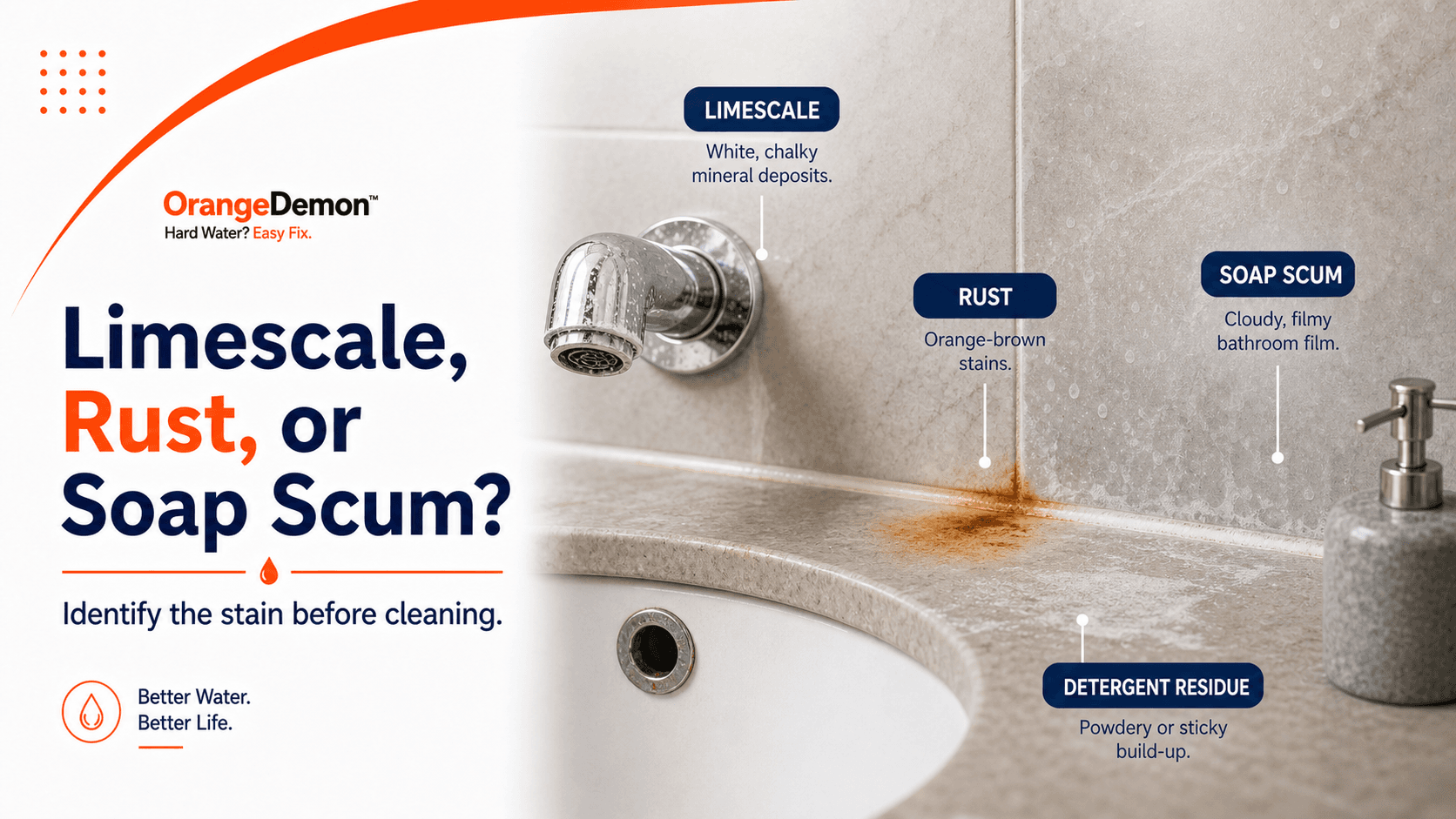
Not every stain is the same. Limescale is mineral deposit. Rust is iron-related staining or corrosion. Soap scum is a fatty film formed when soap reacts with hard water. Detergent residue is leftover cleaning product, usually from overdosing or poor rinsing.
The mistake is using one cleaner for all four. If you identify the deposit correctly, you choose the right product faster and avoid damaging surfaces.
At a glance: how to tell them apart
| Deposit | Looks like | Cause | How to remove |
|---|---|---|---|
| Limescale | White, grey, or chalky crust | Hard water heated or left to dry | Acid-based descaler |
| Rust | Brown, orange, or reddish stains | Iron in the water or metal corrosion | Rust remover, not a descaler |
| Soap scum | Greasy white-grey film | Soap reacting with hard water | Acidic bathroom cleaner |
| Detergent residue | White powdery or streaky film | Overdosing or poor rinsing | Rinse well, reduce the dose |
Source context for deposit diagnosis
Limescale is a hardness-mineral problem, usually tied to calcium and magnesium deposits from hard water (USGS hardness guide). BIS separates total hardness, calcium, magnesium, iron, TDS, and alkalinity in drinking-water specification tables, which is useful because a white mineral deposit, brown iron stain, and detergent film should not be treated as the same problem (BIS IS 10500:2012 PDF). For the underlying hard-water picture, see what TDS and hard water mean.
What limescale looks like
Limescale usually appears as a white, off-white, grey, or chalky crust. It forms where hard water is heated or left to dry.
Common places:
- Kettles
- Coffee machines
- Showerheads
- Taps
- Dishwashers
- Washing machines
- Geysers
- Immersion rods
It may feel rough and does not usually wipe off with plain water. It needs acid-based descaling.
What rust looks like
Rust is usually orange, reddish-brown, or dark brown. It may come from iron in water, corrosion of metal parts, or rust-integrated scale.
Common places:
- Immersion rods
- Geyser parts
- Old plumbing
- Borewell-water appliances
- Metal joints and screws
Rust stains may need stronger or more targeted chemistry than fresh white limescale. WashDX is better suited for heavy appliance-side deposits where scale and rust are mixed.
What soap scum looks like
Soap scum is usually dull, waxy, greyish, or cloudy. It appears on bathroom surfaces where soap and hard water meet.
Common places:
- Shower glass
- Tiles
- Bath areas
- Soap trays
- Around taps
Soap scum is not the same as limescale, but both often appear together in hard-water bathrooms. A surface cleaner may remove soap scum while leaving mineral scale behind.
What detergent residue looks like
Detergent residue is common in washing machines and dishwashers. It may look powdery, slippery, streaky, or filmy.
Common causes:
- Too much detergent
- Low water temperature
- Overloading
- Short cycles
- Poor rinsing
- Hard water interfering with cleaning
If residue is mostly organic or detergent-based, a cleaner may help. If it is chalky and hard, a descaler is needed.
Simple identification table
| Deposit | Colour/feel | Usual cause | Cleaning direction |
|---|---|---|---|
| Limescale | White/grey, chalky, rough | Hard water minerals | Acid descaler |
| Rust | Orange/brown, stain-like or rough | Iron/corrosion | Appliance-safe rust/scale descaling |
| Soap scum | Dull, waxy, grey film | Soap + hard water | Bathroom surface cleaner |
| Detergent residue | Powdery/slippery film | Overdose/poor rinse | Adjust detergent + clean cycle |
Which OrangeDemon product should you use?
For kettle and baby-appliance limescale, use DescaleX Bio.
For coffee machines and dishwashers, use DescaleX. For showerhead flow blockage, use WashDX.
For washing machines, geysers, water tanks, boilers, immersion rods, and RO pre-filter housings, use WashDX.
For bathroom chrome, shower glass, and tap-side surface deposits, use the correct surface-focused product such as TapStrike or Fighter when available. Do not use appliance powders randomly on every surface.
Why this article matters before buying
Most cleaning disappointment comes from misdiagnosis. A customer buys a perfume-heavy cleaner for mineral scale, then says it did not work. Or they use a strong descaler on the wrong surface and risk damage. The better route is to name the deposit first.
Final word
Before cleaning, identify the deposit. White rough crust is usually limescale. Brown staining may involve rust or iron. Waxy bathroom film may be soap scum. Powdery machine residue may be detergent or hard-water film. The correct diagnosis leads to the correct OrangeDemon product.
Name the deposit first, then pick the right OrangeDemon product.