
300-450 ppm
Moderate heater scale over time.
Inspect every 6 months.
GEYSER HARD-WATER HUB
Hard water hurts geysers because every heating cycle encourages minerals to settle on hot metal. Scale acts like insulation, so the element transfers heat poorly, takes longer, and can fail earlier in high-TDS homes.
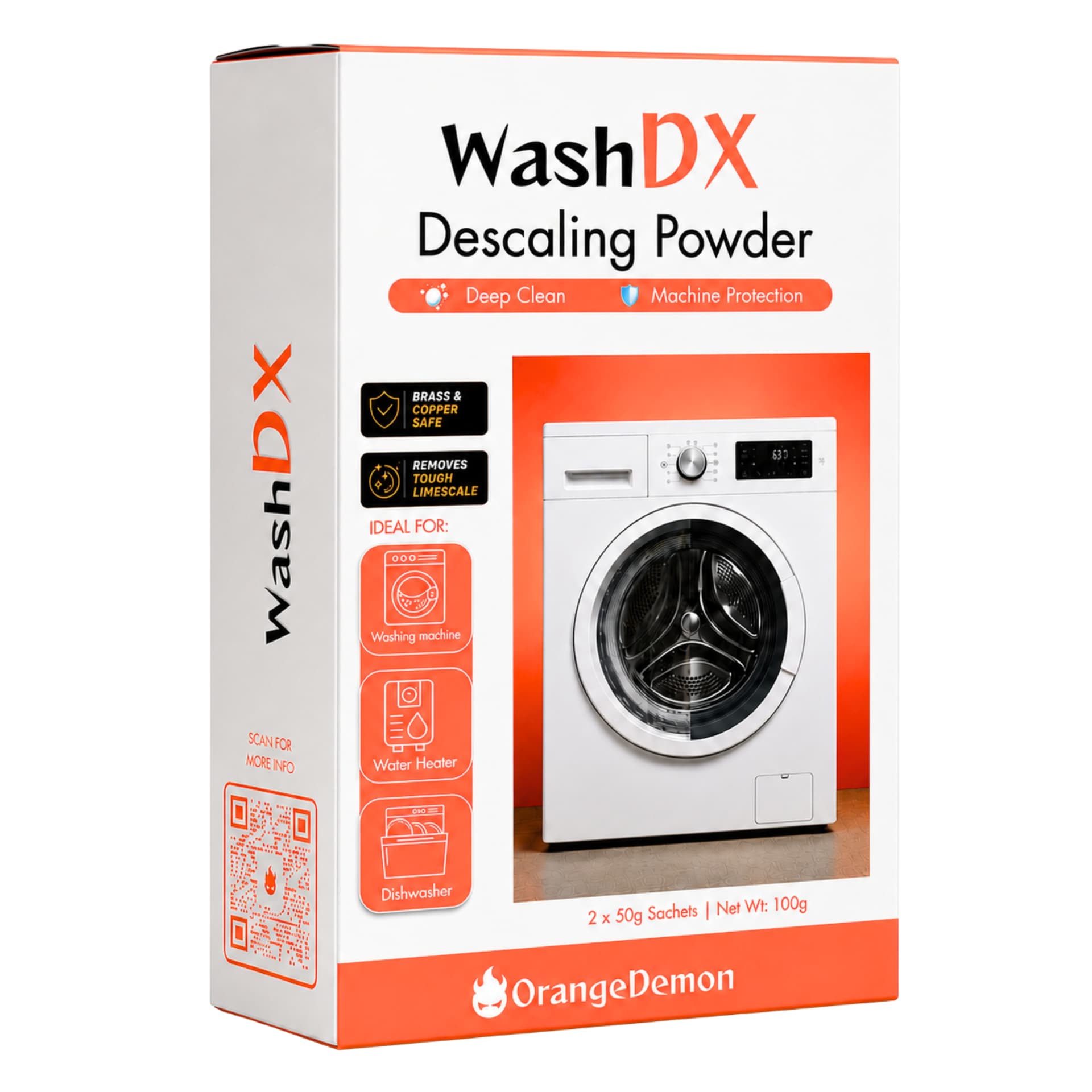
RECOMMENDED PRODUCT
WashDX fits geysers, boilers, water tanks, and immersion rods because these are non-food-contact hot-water jobs with heavier scale load.
DIRECT ANSWER
For geysers and immersion rods, use WashDX with a no-heat soak and flush routine. Do not heat the descaling solution inside the geyser. In 450+ ppm water, plan a routine every 3-4 months, sooner if heating slows or crackling sounds appear.
TDS ROUTINE
300-450 ppm
Moderate heater scale over time.
Inspect every 6 months.
450-600 ppm
Scale can slow heating noticeably.
Descale every 3-4 months.
600-800 ppm
Element scale becomes a real efficiency issue.
Descale every 2-3 months if symptoms appear.
800+ ppm
Heavy mineral load and faster element coating.
Use professional inspection plus frequent flushing.
Heat drives minerals out of solution. That is why the geyser element, immersion rod, and hot-water outlet are usually more vulnerable than cold-water plumbing.
A geyser descaling routine should happen after the appliance is switched off, cooled, and drained. Heating the solution inside the geyser is not the maintenance route.
If the geyser is old, leaking, under warranty, or heavily scaled, professional service is safer than forcing a home routine through blocked fittings.
CHOOSER TABLE
Best product
WashDX
Food-contact kettle descaler
Best safety rule
No-heat soak and flush
Heating acid solution inside the geyser
Best related appliance
Immersion rod and hot-water tank
Coffee machine or kettle route
CITY ENTRY POINTS
COMMON QUESTIONS
Yes. Scale on the heating element acts like insulation, so heat transfer drops and the geyser takes longer to heat the same water.
Use WashDX for geysers, boilers, tanks, and immersion rods. Do not use DescaleX Bio, which is the kettle and food-contact route.
No. The safe routine is switch off, cool, drain, soak without heating, then drain and flush thoroughly before use.
SOURCE METHOD
This hub connects TDS ranges, appliance boundaries, city-level hard-water pages, and product instructions. It is reviewed for practical household use, not written as drinking-water medical advice.