
Quick answer
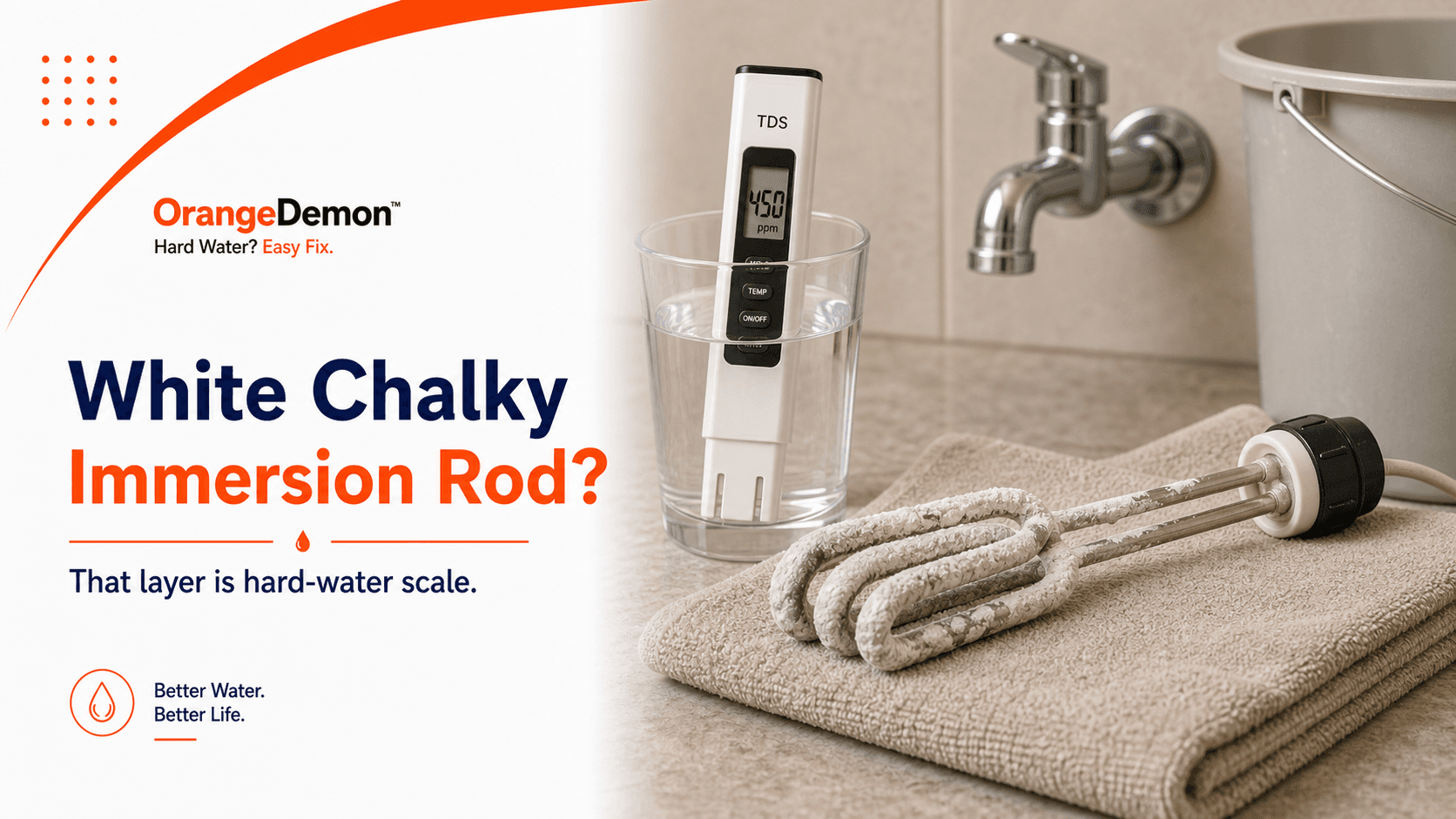
The white chalky layer on an immersion rod is usually limescale: a hard mineral deposit left behind by hard water during heating. In borewell or high-TDS homes, this layer may also look brown, yellow, or rusty because minerals and iron deposits can mix with calcium scale.
For Indian hard-water homes, do not treat this like normal dirt. Use a proper acid-based descaler such as WashDX, soak the rod, rinse it fully, and avoid aggressive scraping that can damage the surface.
Why immersion rods get scale so fast
An immersion rod is almost the perfect scale-forming appliance. It puts direct heat into mineral-rich water. As the water heats, dissolved minerals separate and stick to the hottest surface: the rod.
That is why the deposit appears exactly where the heating happens. The same water may look clear in a bucket, but after repeated heating cycles it leaves a visible crust on the rod.
In Indian homes, this is common because many households use borewell water, tanker water, or high-TDS municipal water. If your kettle, bathroom taps, showerhead, or geyser also show white deposits, the immersion rod is part of the same hard-water pattern.
What the colour tells you
A pure white or off-white layer usually means calcium and magnesium scale. A grey layer may mean older compacted scale. Brown, yellow, or rusty patches often mean iron-rich water or rust-integrated deposits. Rough flakes mean the scale has become layered and brittle.
This matters because heavy brownish scale can be harder to remove than fresh white scale. Plain citric acid may help with light deposits, but dense or rust-mixed scale needs a more capable heavy-duty descaler.
Why scrubbing is the wrong first step
Many people attack the rod with a knife, metal brush, sandpaper, or screwdriver. That may remove some visible crust, but it can also scratch the surface and damage the rod. Scratching makes future buildup worse because mineral deposits grip rough surfaces more easily.
The better method is chemical softening first. Let the descaler dissolve and loosen the mineral layer. After soaking, only wipe or brush gently if needed.
Why WashDX fits this job
WashDX is OrangeDemon's heavy-duty appliance and plumbing descaler. It is made for washing machines, geysers, boilers, water tanks, immersion rods, and RO pre-filter housings.
Its formula is built for hard-water scale, not fragrance cleaning. It includes citric acid for primary scale dissolution, sulfamic acid for hard scale and rust-integrated deposits, fumaric acid for secondary hot-cycle scale removal, sodium gluconate and EDTA for chelation, and BTA for aluminium protection.
That makes it more suitable for immersion rods than food-contact descalers meant for kettles and baby appliances.
How to clean an immersion rod with WashDX
- Unplug the immersion rod.
- Let it cool completely.
- Fill a bucket with warm water, enough to submerge the scaled section.
- Dissolve one 50g WashDX sachet in the water.
- Submerge the rod fully in the solution.
- Soak for around one hour.
- Rinse the rod thoroughly under running water.
- Wipe it dry before the next use.
Do not plug in the rod while it is soaking. Do not heat the descaling solution with the rod. Do not mix with bleach, detergent, or alkaline cleaners.
How often should you descale an immersion rod?
Use this simple guide:
| Water condition | Suggested cleaning rhythm |
|---|---|
| Soft to moderate water | Every 2-4 months |
| Hard water | Every 6-8 weeks |
| Very hard or borewell water | Every 4-6 weeks |
If visible scale returns quickly, treat it as a water-quality issue, not a product failure. Hard water keeps depositing minerals every time the rod is used.
Can you use DescaleX Bio instead?
Use DescaleX Bio for kettles, baby bottle warmers, baby bottles, and food-contact appliances. Use WashDX for immersion rods. The scale load on rods is usually heavier, and the appliance is not a food-contact drinking vessel in the same way a kettle is.
Final word
A chalky immersion rod is a hard-water warning sign. Scraping may make it look better for a day, but it does not address the mineral chemistry. For safe routine maintenance, soak the rod with the correct heavy-duty descaler and rinse it fully.
If your immersion rod has a white crust, clean it with WashDX.