
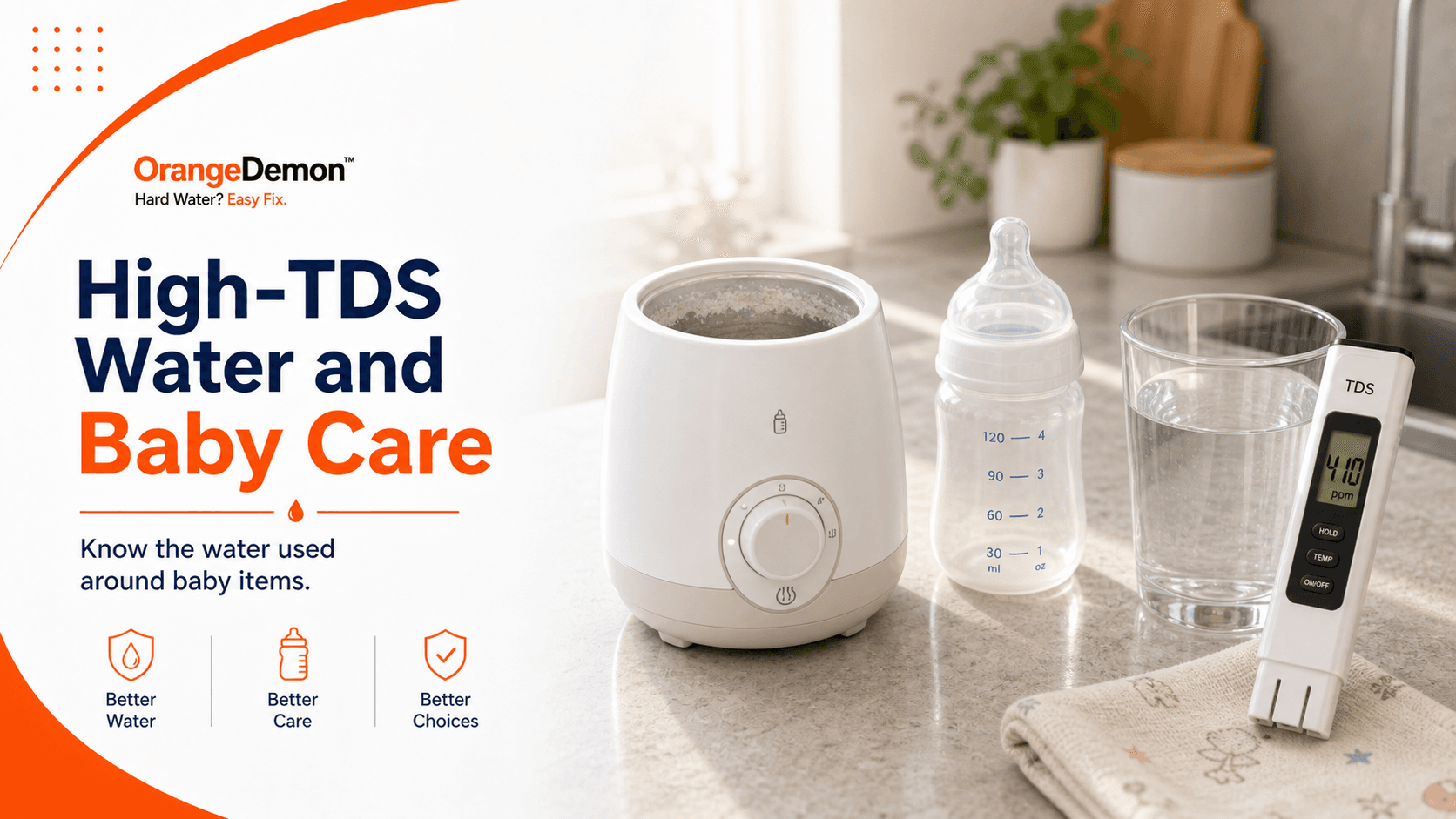
Parents in hard water cities sometimes wonder whether their home's high-TDS water is safe for their baby's skin and, when relevant, for preparing formula. The concern is legitimate and deserves a careful evidence-based answer.
Bathing: The Skin Sensitivity Concern
Infant skin is substantially more sensitive than adult skin - the skin barrier is thinner and less well-developed, pH regulation is less robust, and the immune response is less mature. The same hard water effects that cause dry skin and barrier disruption in adults are amplified in infants.
Research published in the British Journal of Dermatology found that bathing with hard water was associated with increased risk of atopic dermatitis (eczema) in infants with a genetic predisposition to the condition. The mechanism is the same as in adults - elevated pH after hard water bathing, mineral deposits on skin, disrupted barrier function
- but the effect is more pronounced given infant skin's relative immaturity. (New to hard water and TDS? See what TDS and hard water mean.)
Practical implication: for infants with known eczema or family history of atopy, bathing with hard water at 500+ mg/L should be paired with immediate and generous application of an emollient cream (prescribed or OTC barrier cream) while the skin is still damp. Dermatologists often recommend brief baths (5--10 minutes maximum) in warm (not hot) water with an emollient bath additive for eczema-prone infants.
Formula Preparation
For formula-fed infants, water hardness affects the preparation in a different way. BIS and WHO guidelines recommend using water below 250 mg/L for infant formula preparation when possible, as infants' kidneys are less efficient at processing high mineral loads. The primary concern in Indian water, however, is not hardness itself but microbiological safety and fluoride content in affected areas.
In all Indian cities, boiling the water before use for formula is standard practice and addresses microbiological concerns. Boiling removes temporary hardness (calcium bicarbonate) but not permanent hardness (calcium/magnesium sulphates). For areas with very hard water above 500 mg/L, or areas with fluoride concerns (Rajasthan, parts of AP, Telangana), filtered water from an RO purifier is the recommended choice for formula preparation.
Reassurance for Most Cases
The large majority of Indian infants are bathed in whatever water their household has, which is often hard, and do not develop health problems attributable to water hardness. Hard water at typical Indian levels (300--700 mg/L) is not acutely harmful for infants. The concern is specifically for infants with genetic eczema susceptibility and the enhanced importance of barrier cream use post-bath in those cases.
TapStrike Intense is OrangeDemon's heavy-duty spray for limescale, hard-water marks and soap scum on taps, sinks, washbasins and glazed tiles. See TapStrike Intense.
Seen results with OrangeDemon? Share a before/after on Instagram @orangedemon.in or tag us on Twitter/X @OrangeDemonIn.
Follow OrangeDemon: Instagram / YouTube / Twitter / X