
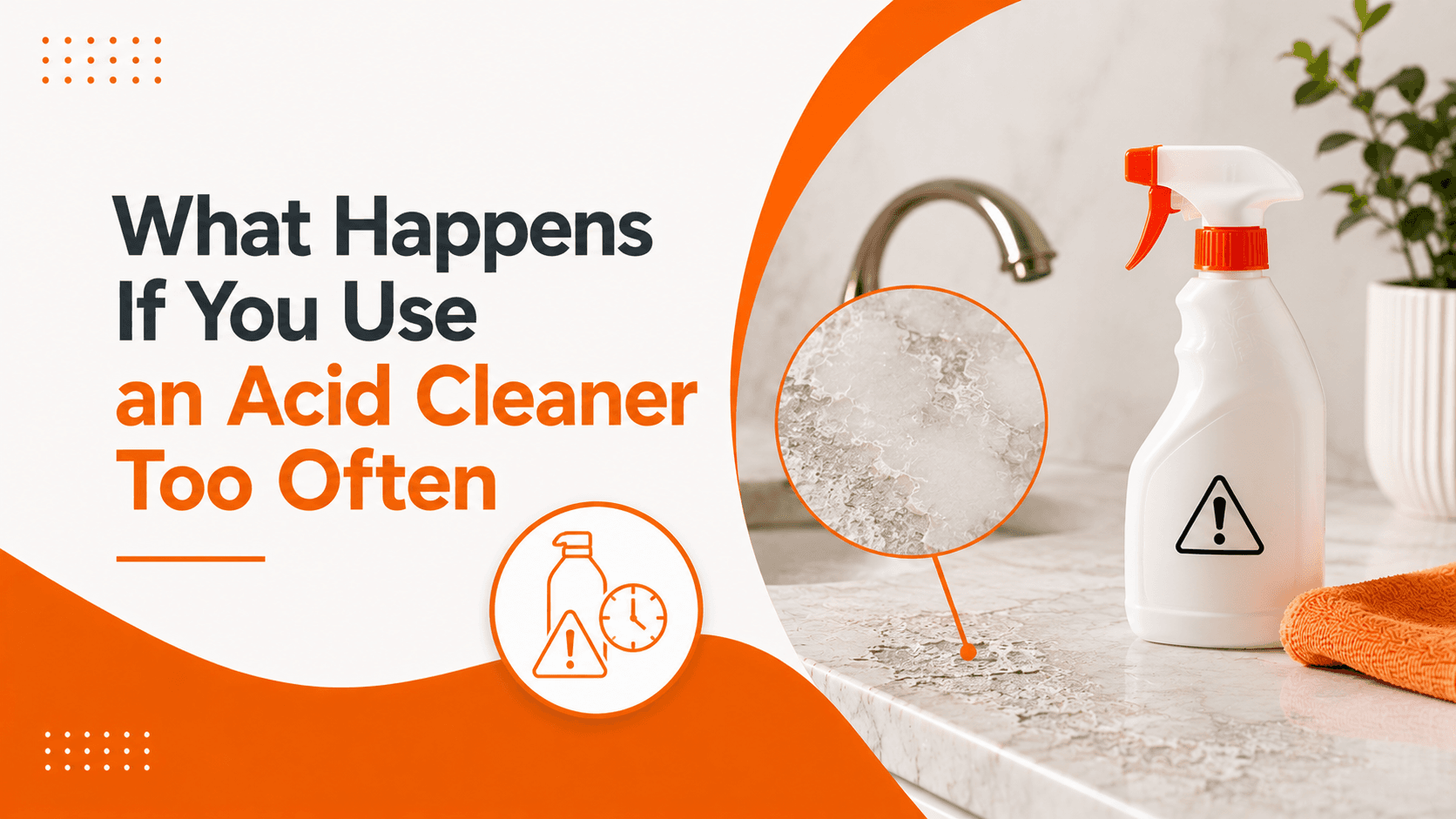
When people learn that acid dissolves calcium carbonate, a natural follow-up question is: if acid dissolves minerals, couldn't frequent use also damage my bathroom surfaces It's a reasonable concern. Here's what actually happens with regular acid use.
On Glass
Standard tempered or toughened glass (SiO2-based) has good resistance to dilute acid. The dilute organic acids used in bathroom descalers at working concentration (pH 2--4) do not etch or damage glass in normal contact times (60--90 seconds). The acid reacts preferentially with calcium carbonate, which is chemically much more reactive with acid than silicon dioxide.
Genuine acid etching of glass requires concentrated hydrofluoric acid (HF) - the chemical used for glass engraving. No bathroom cleaner contains hydrofluoric acid. Weekly use of a properly formulated dilute acid bathroom cleaner on glass is safe indefinitely.
On Chrome
Chrome plating is more sensitive than glass. Dilute organic acids at working concentration (pH 2--4) are tolerated by chrome for brief contact periods - 60--120 seconds - without damage. Prolonged acid pooling on chrome (leaving solution sitting in contact for 10+ minutes repeatedly) can eventually affect the chrome layer, particularly if the plating is thin or already has micro-damage.
For chrome, the practical rule is: spray, wait 60--90 seconds, wipe, rinse immediately and thoroughly. Do not leave acid pooling on chrome fittings. This frequency and contact time, even applied weekly, causes no measurable harm to quality chrome.
On Tiles
Ceramic and vitrified tiles are acid-resistant. The glaze is glass-based (SiO2) with metal oxide colourants. Weekly acid treatment at proper dilutions causes no damage to tile surfaces. The grout between tiles is more sensitive - it's cement-based and prolonged acid contact can etch it. Brief acid treatment (60 seconds) followed by thorough rinsing is safe. Soaking grout in acid for extended periods is not recommended.
The Real Risk --- Concentrated Acid
The situations that cause actual damage are: using industrial or undiluted acid products rather than the working-concentration formulations designed for bathroom use, allowing acid to pool in corners or at fixture bases rather than wiping off, or using acid on surfaces explicitly not rated for acid use (marble, natural stone). Within the parameters of a well-formulated consumer acid bathroom cleaner used as directed, weekly frequency causes no cumulative damage.
TapStrike Intense is OrangeDemon's heavy-duty spray for limescale, hard-water marks and soap scum on taps, sinks, washbasins and glazed tiles. See TapStrike Intense.
Seen results with OrangeDemon? Share a before/after on Instagram @orangedemon.in or tag us on Twitter/X @OrangeDemonIn.
Follow OrangeDemon: Instagram / YouTube / Twitter / X