

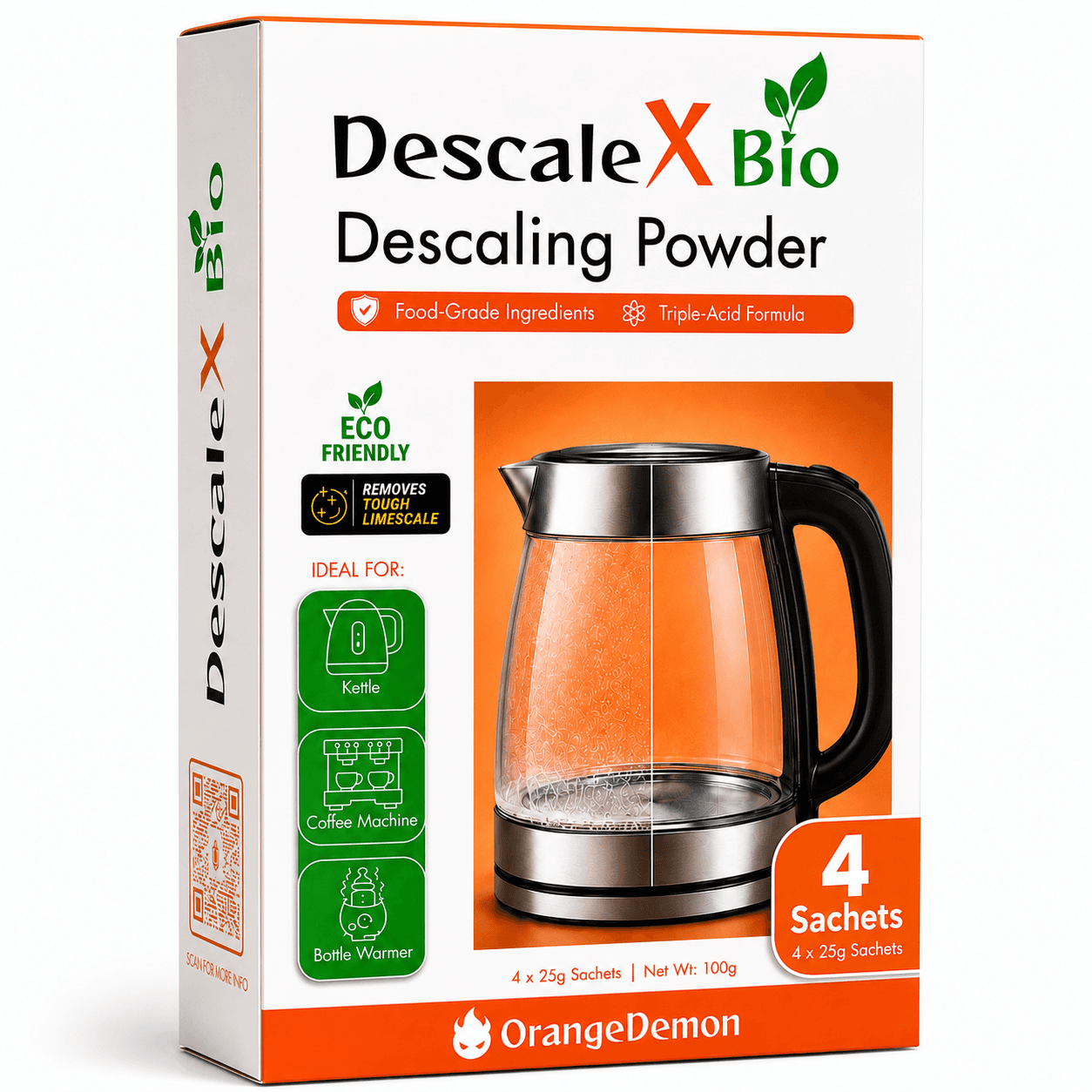
You descale the kettle. It looks clean again. Then two or three weeks later, the white layer is back.
At that point people usually assume one of three things:
- the kettle is poor quality
- the descaler was weak
- scale just cannot be prevented
Usually none of those is the real answer. (If the crust keeps returning, first check you are descaling the kettle correctly — soak time and rinse count matter as much as the product.)
In most Indian homes, kettle scale comes back fast because the kettle is the perfect machine for hard water to leave deposits behind.
A kettle is basically a scale accelerator
Most appliances flush water through and move on. A kettle does the opposite.
It repeatedly:
- heats the same mineral-heavy water
- concentrates those minerals through boiling
- leaves hot interior surfaces ready for deposits to bond
That is why the kettle is often the first appliance to tell you your water is hard.
The biggest reason scale returns quickly
People keep topping up old water instead of emptying and refilling.
This seems harmless. It is not.
When you boil half the kettle and then top it up again later, you are not resetting the mineral load. You are carrying part of the old concentrated water forward into the next boil.
Do that repeatedly and scale returns much faster.
Four habits that make kettle scaling worse
1. Leaving water sitting inside all day
Standing water slowly evaporates and leaves more mineral behind. Even before the next full boil, the concentration has already shifted upward.
2. Reboiling the same water
Every reheating cycle pushes the same minerals through another round of concentration and precipitation.
3. Boiling more water than you need
The more excess water you repeatedly heat and leave behind, the faster the mineral story compounds.
4. Waiting until the crust is thick
Light scale is easy maintenance. Dense scale becomes a recovery job.
If you only descale when the kettle already looks cement-lined, the next cycle starts from a worse baseline. See the best kettle descaler for Indian hard water for what actually clears it.
TDS changes everything
The same kettle behaves very differently in different cities.
| TDS level | How quickly scale returns |
|---|---|
| Under 300 ppm | Usually slow |
| 300-500 ppm | Often visible within 6-8 weeks |
| 500-700 ppm | Commonly visible within a month |
| 700+ ppm | Can return in 2-3 weeks |
So if your kettle is scaling again within days or weeks, that is often a water clue, not a product-quality clue — what your TDS number means explains the thresholds above.
Why one light clean is sometimes not enough
If the kettle had months of buildup before you descaled it, the first clean may remove the easy outer layer and leave some stubborn deposits behind.
That makes the next wave of buildup look "sudden," even though the surface was not fully reset.
Signs the first cycle was not enough:
- the base still looks rough after rinsing
- grey-white crust remains around the element
- boil time improves only slightly
In that case, a second proper descaling pass makes more sense than waiting for the crust to rebuild fully.
The habit that helps most
Empty the kettle after use. Refill with fresh water next time.
That one change does more than most households expect.
Not because it eliminates hard water. It does not. But it stops the kettle from carrying concentrated mineral residue forward from one boil to the next.
A practical routine that works
- descale before the crust gets heavy
- empty leftover water after use
- avoid repeated top-ups of old water
- match the schedule to your TDS instead of guessing
If your home is above 400 ppm, kettle descaling is not an occasional deep-clean task. It is routine maintenance.
The honest answer
When kettle scale comes back fast, the kettle is usually not the problem. The water is.
The right response is not to keep replacing kettles. It is to descale properly, adjust the habits that accelerate buildup, and use your local TDS to set a real schedule.
Read next: Your Kettle is Not Broken. It Just Needs Descaling.
If your kettle scales faster than it should, keep DescaleX Bio on hand for the kettle and food-contact side of your routine. View the DescaleX Bio kettle route.