
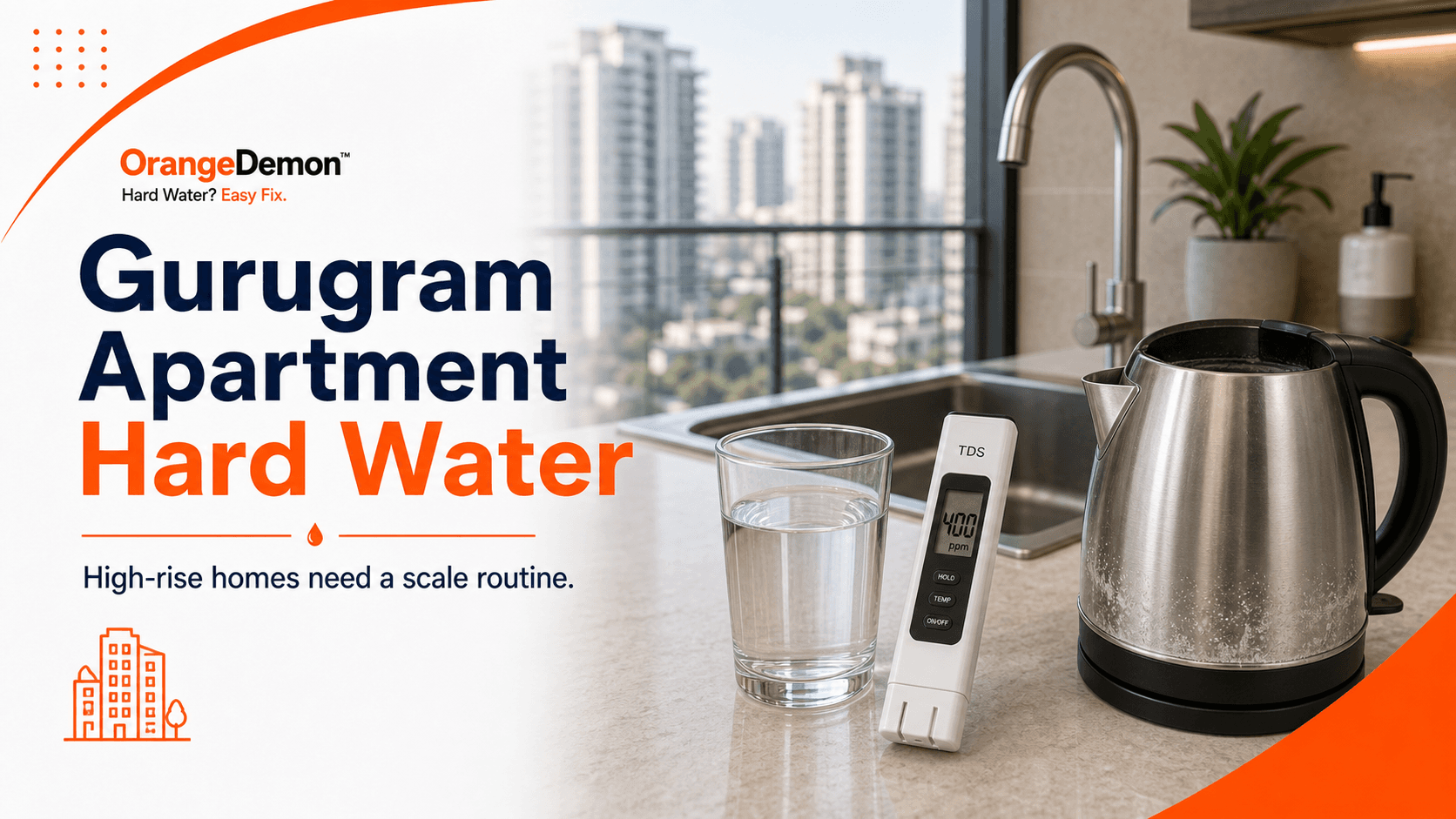
Gurugram is one of the clearest examples of a modern Indian real-estate contradiction.
You can spend crores on an apartment with imported fittings, floor-to- ceiling shower glass, premium kitchen appliances, and designer bathrooms, and still end up dealing with the same mineral scale problems you would expect in a far less expensive property.
That is because premium housing does not automatically mean premium water. (New to TDS? See what TDS and hard water mean.)
The Gurugram hard-water problem is structural
When people search for hard water in Gurugram, they are often really searching for an explanation of a mismatch:
- the home looks high-end
- the maintenance bill is high
- the water still leaves scale everywhere
The answer usually comes back to source quality.
Large parts of Gurugram have historically depended on groundwater, blended supply, or locality-dependent water quality rather than a uniformly good municipal-water experience. In practical terms, that means many societies still receive water that is hard enough to cause:
- cloudy shower glass
- white crust on taps
- clogged showerheads
- faster scale buildup in kettles and coffee machines
- reduced efficiency in geysers and other heating appliances
That is not a cleaning issue. It is a water-chemistry issue.
Why apartments do not protect you from hard water
There is a common assumption that apartment living solves infrastructure problems.
In Gurugram, that is often false.
The building may be well managed, beautifully designed, and expensive, but it still sits inside a city with serious water-sourcing constraints. If the society depends on borewell-heavy supply, mixed sources, or backup extraction, the resident experiences the mineral load whether the lobby has marble or not.
In fact, apartments can make the perception gap worse because the water is interacting with more expensive surfaces:
- frameless glass shower enclosures
- brushed metal fittings
- premium countertops
- imported appliances
Hard water becomes more visible when the finishes are designed to look pristine.
Why Gurugram residents feel the issue so quickly
The lifestyle pattern in Gurugram amplifies the pain:
- many residents expect low-maintenance, premium interiors
- bathrooms are often glass-heavy and chrome-heavy
- societies rely on centralized water arrangements the resident does not control
- working professionals want efficient upkeep, not constant scrubbing
So scale is not just technically present. It becomes emotionally annoying fast.
What should have looked polished starts looking neglected, even when the resident is cleaning regularly.
The biggest misunderstanding: "we clean a lot, so why does it still look bad"
This is where hard-water content needs to be sharper than generic home- care advice.
Many Gurugram residents are already cleaning. The problem is they are often cleaning the wrong kind of deposit with the wrong kind of product.
Scale is mineral deposit, not ordinary dirt.
If the surface is coated with calcium- and magnesium-based buildup, general bathroom cleaners and surface sprays often remove residue from the top without fully dissolving the bonded mineral layer underneath. That is why:
- haze returns quickly
- taps keep developing a crust ring
- shower glass never seems fully clear
The user interprets this as a cleaning failure. The real issue is that the water source is repeatedly laying down new mineral material.
Appliance damage is the more expensive part
Bathroom aesthetics get attention first, but appliance impact is usually the more expensive consequence.
In Gurugram homes with hard water, scale does not stop at visible surfaces. It also builds up inside:
- washing machines
- dishwashers
- kettles
- coffee machines
- geysers and other heat-based systems
That can lead to slower heating, poor performance, odor retention, higher energy use, and shorter maintenance intervals.
This is where a city-specific content strategy should connect the dots: hard water is not just making the bathroom look worse. It is quietly raising the cost of owning the home.
For city-level numbers and context, see Hard Water in Gurugram.
What a practical Gurugram maintenance strategy looks like
You do not need to wait for the entire city's water situation to become perfect before protecting your home.
A practical response usually includes:
- accepting that your apartment may still be receiving hard water
- maintaining glass and fittings with the right chemistry
- descaling appliances on a predictable schedule
- adjusting that schedule upward if the society relies heavily on groundwater
That is a much better answer than endlessly re-buying "cleaner" products that do not solve mineral buildup.
Where DescaleX fits
DescaleX is relevant in Gurugram because the city creates exactly the kind of use case it is designed for: repeated mineral load inside appliances and fixtures that residents want to preserve.
If your home is showing classic hard-water signs, DescaleX helps you tackle the appliance side before the problem turns into a performance or replacement issue.
That makes it especially relevant for:
- washing machines in tower apartments
- kettles and coffee machines used daily
- dishwashers in premium kitchens
- homes where the visible signs of hard water are already obvious
Final takeaway
Gurugram's apartment hard-water problem is not surprising once you look past the building brochure.
The city has high-end housing, but water quality still varies heavily by source, locality, and society-level reality. That is why luxury homes can still end up with foggy glass, crusted chrome, and scaled appliances.
The smart move is not to assume premium real estate guarantees premium water. The smart move is to maintain the home for the water it actually gets.
Read the city breakdown at Hard Water in Gurugram, and if your appliances are already showing scale symptoms, shop DescaleX.